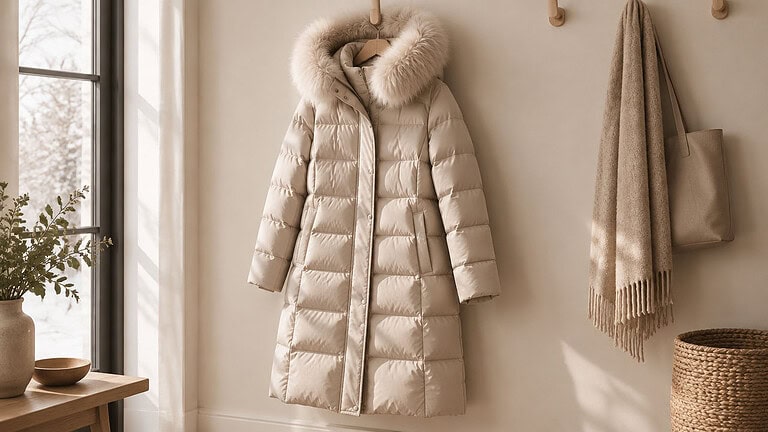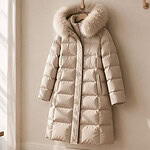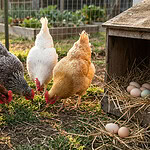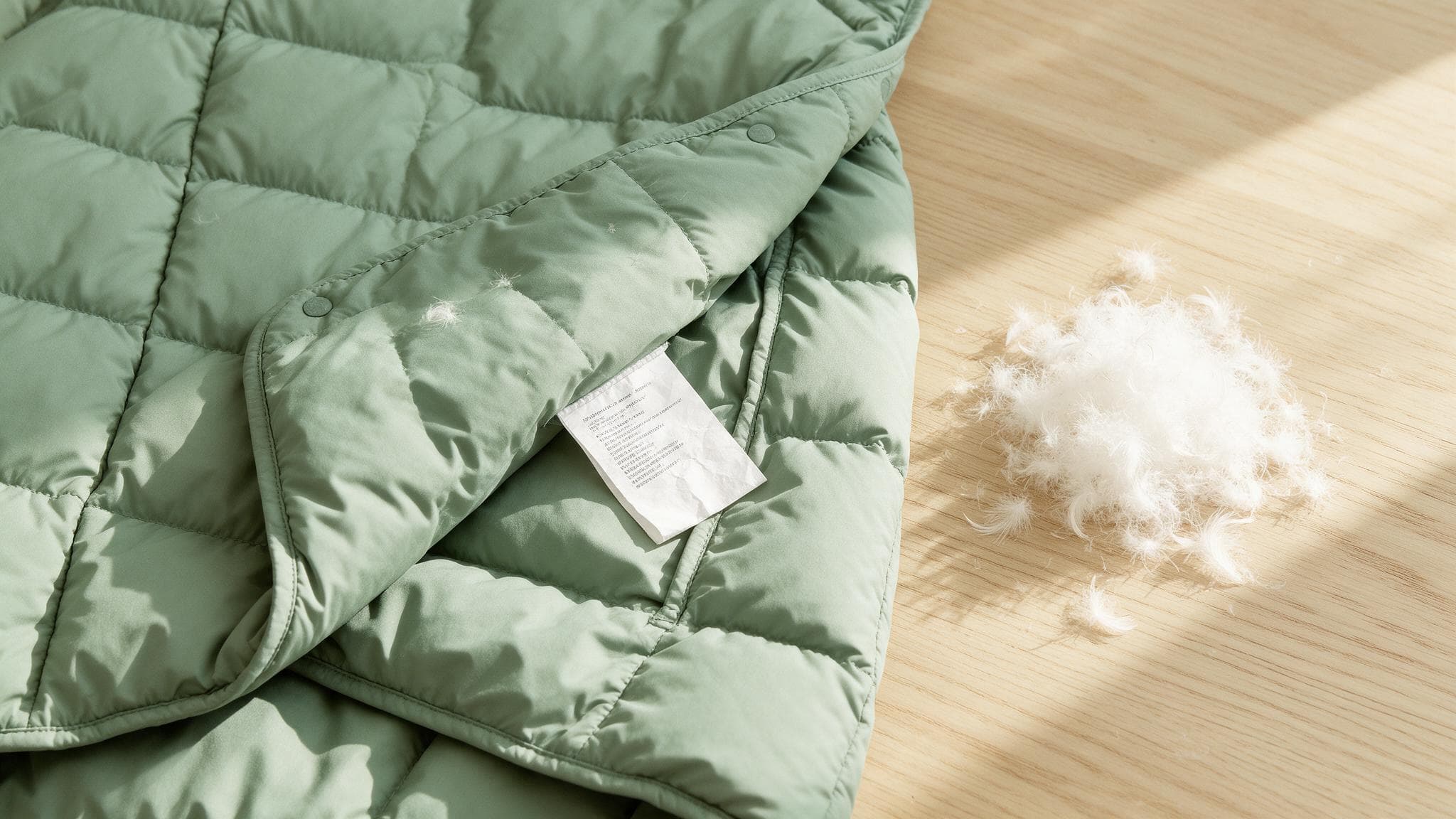

No, down isn’t vegan, and certified down isn’t either. Down is the soft under-plumage of ducks and geese, and the Responsible Down Standard, the certificate on many down jackets, requires that all of it comes from waterfowl raised for food.
Patagonia shows the problem on one rack. Its Down Sweater, $289, is filled with “800-fill-power 100% Responsible Down Standard down certified by Control Union”. Its Nano Puff, $239 at list price, is filled with PrimaLoft Gold Insulation Eco, 100% postconsumer recycled polyester. Same brand, opposite answers, and the certificate is printed on the one that fails. Neither page uses the word vegan, so the brand name on the tag settles nothing. The fill line does.
What the down certificate checks
The Responsible Down Standard is a welfare scheme, and a specific one. Its 3.0 user manual bans force-feeding and live-plucking, and it counts molt harvesting of any kind as live-plucking. Farms may not buy force-fed birds or send birds out to be force-fed.
What it does not do is keep the birds alive. The certification procedures treat every site where waterfowl are slaughtered as a slaughter site, apart from small farms inside a Farm Area Certification. Slaughter sites report the number of certified ducks and geese they slaughtered, every quarter. Certified farms report the age of their birds at slaughter, in days, and the distance to the slaughter site, in kilometers. One line in the same document lists “Recent drop in meat prices” as a risk factor for live-plucking, rated Medium. The standard’s own authors treat cheap meat as a reason to watch the plucking more closely.
So vegan and responsible are answering different questions. The certificate asks how the bird was kept and plucked. Vegan asks whether the material came off an animal, and down always does. A certified down jacket sits where leather from a meat animal sits, which is why our guide to what vegan leather is made of will feel familiar.
People who wear certified down make a fair case: the birds were raised for meat and the feathers would otherwise be thrown away, so buying them adds no deaths. Vegans who reject it answer that a by-product with a price is income for whoever did the killing. Our line is that down is not vegan, certified or not.
Seven jackets, read from the makers’ pages
| Jacket | Fill, per the maker | Vegan? | Price when read |
|---|---|---|---|
| Patagonia Down Sweater | 800-fill RDS down | No | $289 |
| The North Face 1996 Retro Nuptse | 700 fill recycled waterfowl down | No | $380 |
| Patagonia Nano Puff | PrimaLoft Gold Eco, recycled polyester | Fill and fabrics, no vegan claim | $239 list, $118.99 on sale |
| The North Face ThermoBall Jacket | ThermoBall, recycled polyester | Fill and fabrics, no vegan claim | $220 list, $154 on sale |
| Save The Duck Alexander | Plumtech, 100% polyester | Yes, brand says 100% animal free | $198 |
| Alpine North Glacier parka | Recycled polyester | Yes, per its FAQ | $280 |
| OROS Orion Parka | SOLARCORE | Yes, except OROS gloves | $529 |
Patagonia Down Sweater
The shell is recycled nylon from fishing nets and the fill is RDS down certified by Control Union. The page says buying RDS-certified products “demonstrates demand for better animal welfare practices in the down and feather supply chain”. That is a welfare claim, and Patagonia makes it honestly. It is still a bag of feathers. If this is on your list, buy the Nano Puff from the same company instead.
The North Face 1996 Retro Nuptse
The Nuptse is filled with “700 fill recycled waterfowl down”, and the page carries no RDS wording at all. Recycled is the word doing the work here. It means the feathers had a previous life in another product, which puts this jacket in the same argument as buying second-hand leather, where vegans draw the line in different places. On the ingredient question it is simple: the fill is down, so it is not vegan. At $380 it is also the most expensive way on this list to get it wrong.
Patagonia Nano Puff
Everything Patagonia lists in it is polyester: the PrimaLoft fill, a 20-denier recycled ripstop shell and a 22-denier recycled lining. List price is $239, and it was $118.99 on sale when read. The catch is that Patagonia makes no vegan statement on the page, so trims and labels are left to you. For a fill-and-fabric check it passes.
The North Face ThermoBall Jacket
ThermoBall is 100% post-consumer recycled polyester at 11 g per square foot, and the shell is recycled polyester too. The page shows $220, struck through to $154 when read. Like Patagonia, The North Face sells down and synthetic jackets side by side and says nothing about vegan on either page. Pick by the fill line, never by the logo.
Save The Duck Alexander
Save The Duck is the only brand here whose animal-free statement reads like a checklist. It says it is “100% animal free” and avoids feathers, skins, furs, silks, wools, horns, bones, mother of pearl, and waxes, glues and dyes of animal origin. Glue is the one I would never have thought to ask a shop assistant about, and there it is on the list. Its Plumtech padding is 100% polyester, and the Alexander puffer costs $198 on the brand’s US store. The description lists a standing collar and mentions no hood, so if you need one, look at another style.
Alpine North Glacier parka
Alpine North’s FAQ says its jackets are vegan and 100% animal-free, with insulation and trims that are fully synthetic. The fill is a recycled polyester made to mimic down. The women’s Glacier parka is $280, rated by the brand to -30°C (-22°F), with a removable hood and faux fur trim. That trim has to come off before every wash, and the jacket hangs dry.
Two small things made me laugh. The product is sold as “Vegan Down (Recycled)”, so the word down turns up on a jacket with no down in it. And in the same FAQ, the question “What is a vegan jacket?” is answered with “Use this text to answer questions in as much detail as possible for your customers”. Someone forgot to fill in the template. The answers that matter are filled in.
OROS Orion Parka
OROS says all of its products are insulated with SOLARCORE and that everything except its gloves is 100% vegan. The women’s Orion Parka is $529, the most expensive vegan jacket here, and its own product description names the Apex Parka in its first paragraph, which does not fill me with confidence about the proofreading. The jacket is the safe part. If you were about to add the matching gloves, don’t: the FAQ excludes them and does not say why.
Our pick, and who should skip all of them
Our pick is the Save The Duck Alexander. The brand puts glues, waxes and dyes in writing, and at $198 it costs less than the other two jackets whose makers call them vegan. For deep cold, the Alpine North Glacier is the one we’d reach for: the brand rates it to -22°F, and its FAQ covers the trims as well as the fill.
Skip all five down-free jackets if you avoid synthetic fibers. Four of them list polyester fill, and OROS doesn’t say on its FAQ what SOLARCORE is made of.
How to check a jacket yourself
Start with the fill line. Under the FTC’s textile labeling rules, a filling used for warmth has to have its fiber disclosed, written as a separate line such as “Filling: 100% Cotton”. For down itself the federal rules are thinner. In 1998 the FTC rescinded its guides for the feather and down industry and left down composition to deception law and market forces, which work “as long as the fill mixture is truthfully disclosed”. Down, feather, duck or goose on that line means no.
A Responsible Down Standard or “responsibly sourced down” tag answers the question too, because a down certificate only appears where there is down. Treat the word down in a product name with care in the other direction. Alpine North uses it for polyester.
Then read past the fill. A synthetic fill settles nothing about the shell, the lining, the trim or a leather-look patch, and “cruelty-free” or “vegan-friendly” on a hang tag is only a word until the composition label agrees.
Buy the synthetic fill with the trims spelled out, and if the fill line says polyester, our look at whether polyester itself is vegan covers what you’re wearing instead.
Sources
- Responsible Down Standard 3.0 user manual: bans on force-feeding, live-plucking and molt harvesting; down from waterfowl raised for food
- Patagonia Men’s Down Sweater: RDS down certified by Control Union, price, welfare statement
- Patagonia Men’s Nano Puff: PrimaLoft Gold Eco fill, recycled polyester shell and lining, price
- RDS certification procedures 3.3: slaughter sites, slaughter counts, age at slaughter, distance, “Recent drop in meat prices”
- The North Face Men’s 1996 Retro Nuptse: 700 fill recycled waterfowl down, price
- The North Face Men’s ThermoBall Jacket: recycled polyester fill and shell, price
- Save The Duck, We respect animals: 100% animal free, excluded materials, Plumtech 100% polyester
- Save The Duck Men’s Puffer Jacket Alexander, US store: Plumtech, standing collar, price
- Alpine North FAQ: vegan, synthetic insulation and trims, washing, the unfilled vegan-jacket answer
- Alpine North Glacier women’s parka: price, temperature rating, removable hood with faux fur trim
- OROS FAQ: SOLARCORE in all products, 100% vegan except gloves
- OROS Women’s Orion Parka: price and product description
- FTC, Threading your way through the labeling requirements under the Textile and Wool Acts: fiber disclosure for filling used for warmth
- FTC rescission of the Guides for the Feather and Down Products Industry, Federal Register, 20 August 1998