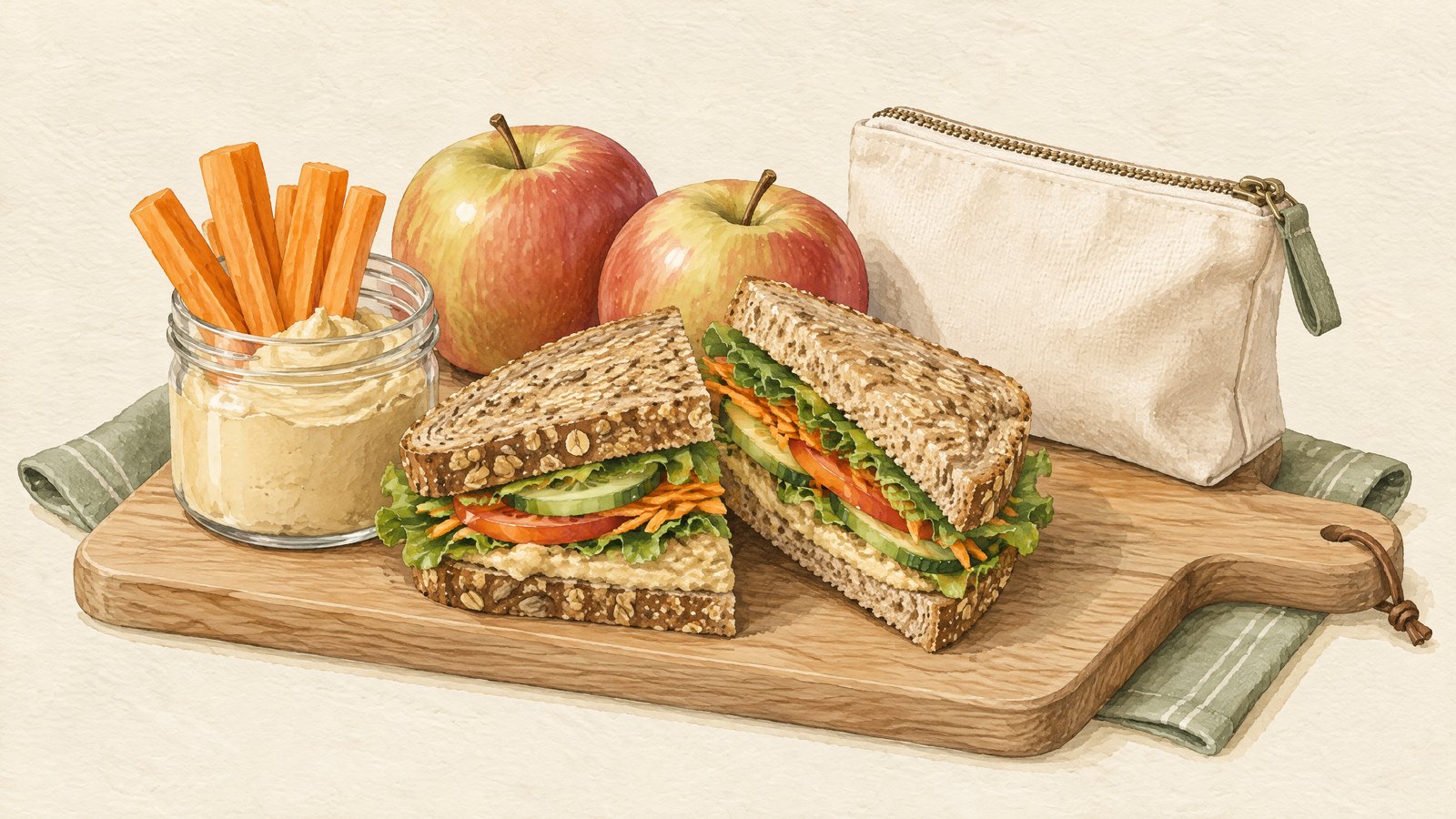

Pack your own food. Delta, United and American all list a vegan special meal, but United’s wider menu is for flights over 2,000 miles, American serves it domestically only in First with a full meal, and Delta only where meals are complimentary. Solid food clears security; in a carry-on, hummus and peanut butter fall under the 3.4 oz limit.
The meal itself is the easy part. Delta calls its vegan meal, code VGML, “strictly vegan,” with no meat, seafood, eggs, dairy or animal by-products. United’s is prepared without meat, poultry, fish, dairy, eggs or animal products, and American’s combined vegetarian and vegan meal leaves out meat, fish, fowl, eggs, dairy products and derivatives. Nobody is hiding egg in the airline definition. The gap is where you can get it. United introduced its wider special-meal list for flights over 2,000 miles. American’s page lists special meals in all classes on routes to and from Asia, Australia, Europe, New Zealand and a handful of South American cities and Doha, and marks its vegan meal as available on most domestic flights only “when a full meal is served in First”. Delta offers special meals in all five of its cabins, from Delta One to Main, but only on flights where it serves a complimentary meal, and not at all on flights from El Paso, Albuquerque or Tucson. So read “special meal” as “special flight.” On a short domestic economy flight, the vegan meal is usually the one you brought, which is the same backup logic as our guide to eating vegan at a work event, with worse elbow room.
When you do qualify, order early. Delta and United want the request at least 24 hours before departure, and American takes it from 30 days out until 20 hours before takeoff. American also asks you to tell the gate agent and the flight attendant that you ordered one.
What clears airport security
TSA’s food rule is simpler than its reputation. Solid food can go in your carry-on or your checked bag within the continental US, and liquid or gel foods over 3.4 oz can’t go in the carry-on. Sandwiches are a plain yes. The catch is what counts as a gel. TSA’s own pages list hummus and peanut butter as carry-on items only at 3.4 oz or less, so the tub that made your sandwich worth eating is, as far as the checkpoint is concerned, a shampoo. Spread it on at home, or buy the small cups.
TSA allows fresh fruit and vegetables in carry-on and checked bags within the continental US, with one exception that catches people coming home from somewhere nice. Passengers flying to the mainland from Hawaii, Puerto Rico or the US Virgin Islands can’t take most fresh fruits and vegetables, because of the risk of spreading invasive plant pests. TSA’s pages for hummus, peanut butter and fresh produce all add that the final decision rests with the TSA officer. Officers may also ask you to take foods out of your carry-on so the X-ray image stays clear, and TSA encourages keeping the bag uncluttered, so pack the food where you can reach it without unpacking your life.
What clears customs on the way back
International trips add a second checkpoint, and it cares about different things. US Customs and Border Protection says the declaration must cover everything in your checked and carry-on bags, and tells travelers to always declare agricultural items on Question 11 of the declaration form. Undeclared prohibited items are confiscated and disposed of, and civil penalties may reach $1,000 for a first offense with non-commercial quantities, more for commercial ones.
Which fruit is allowed depends on where it comes from. Some fresh produce can enter without advance permission if you declare it and it is inspected and found free of pests; from Canada, CBP names fresh tomatoes and bell peppers as prohibited, and from Mexico it lists stone fruit, apples, mangoes and oranges among the produce that needs a permit. That makes the emergency apple in your bag a customs item, not a snack. Eat it on the plane, or declare it and let them decide.
Where we land
Our line is that the airline vegan meal is a bonus, not a plan. Delta, United and American all define it well; the limits are about distance, meal service and, on American, the cabin, and a short domestic economy flight usually misses all three. So plan around what the checkpoints allow: solid food, spreads in small cups, produce eaten before security when you leave Hawaii, Puerto Rico or the US Virgin Islands, and eaten or declared when you fly back from abroad.
The part I’m least sure about is the trip booked across more than one airline. Delta says a meal requested through another carrier won’t be applied to the Delta segment of the reservation, and asks you to make sure the request covers every segment. United’s and American’s pages, as I read them, don’t say how they handle the same case. If your ticket mixes airlines, request the meal from the airline that operates each leg, and check it again before you fly. And once you land somewhere with a red-sauce kitchen, our guide to vegan options at Italian restaurants reads three chains’ allergen charts so you don’t have to.
Sources
- United Airlines, Special meals
- American Airlines, Special meals and nut allergies
- Delta, Special Meal Requests (SPML), Delta Professional
- TSA, What Can I Bring: fresh fruits and vegetables
- TSA, What Can I Bring: hummus
- TSA, What Can I Bring: peanut butter
- TSA, What Can I Bring: sandwiches
- U.S. Customs and Border Protection, Bringing agricultural products into the United States