
Aim for 250 mg of EPA and DHA a day, which is the adequate intake EFSA set for healthy adults and children. Our line is to take an algae oil and read its label against that figure. The gram doses printed alongside it answer a different question, and nothing we read sets a separate number for vegans.
Where the 250 mg comes from
The figure belongs to the European Food Safety Authority’s nutrition panel, which, in its work on dietary reference values, concluded that 250 mg a day is an adequate intake for the maintenance of general cardiovascular health among healthy adults and children. That is the whole of its official standing in what we read. The panel names healthy adults and children as its population, and it neither singles out vegans nor leaves them out.
This matters because the question in the title has two halves that usually get answered as one. “How much EPA and DHA” has a published answer. “Do vegans need a supplement to get it” does not, at least in the material behind this article, and the honest version of this piece keeps the two apart instead of letting the first lend its authority to the second.
The order of operations is the same one we use for B12. Settle the number, then choose the product, then hold the label up against the number. Omega-3 is messier only because the number is softer and the case for needing the product is harder to pin down.
What the 2 to 4 g figures are for
The same EFSA statement carries a second set of numbers. The panel found that EPA and DHA intakes of between 2 g and 4 g a day are needed to reach claimed effects such as the maintenance of blood pressure and triglyceride levels, which by our arithmetic is 8 to 16 times the 250 mg adequate intake. In the same passage it says 250 mg a day is sufficient for the maintenance of normal cardiac function.
In the panel’s own wording those are two different jobs, one the intake sufficient for normal cardiac function in healthy people and the other the level tied to particular claimed effects.
A vegan reading a capsule box should hold onto that distinction. When a label or an ad leans on gram-level doses, ask which of the two jobs it is talking about before treating the bigger number as the vegan baseline. Our sources attach the gram range to blood pressure and triglyceride claims and give no reason drawn from diet to take it. If those claims are why you are looking, that is a dose to set with a doctor, and a capsule box is the wrong place to set it.
Why the question lands on vegans
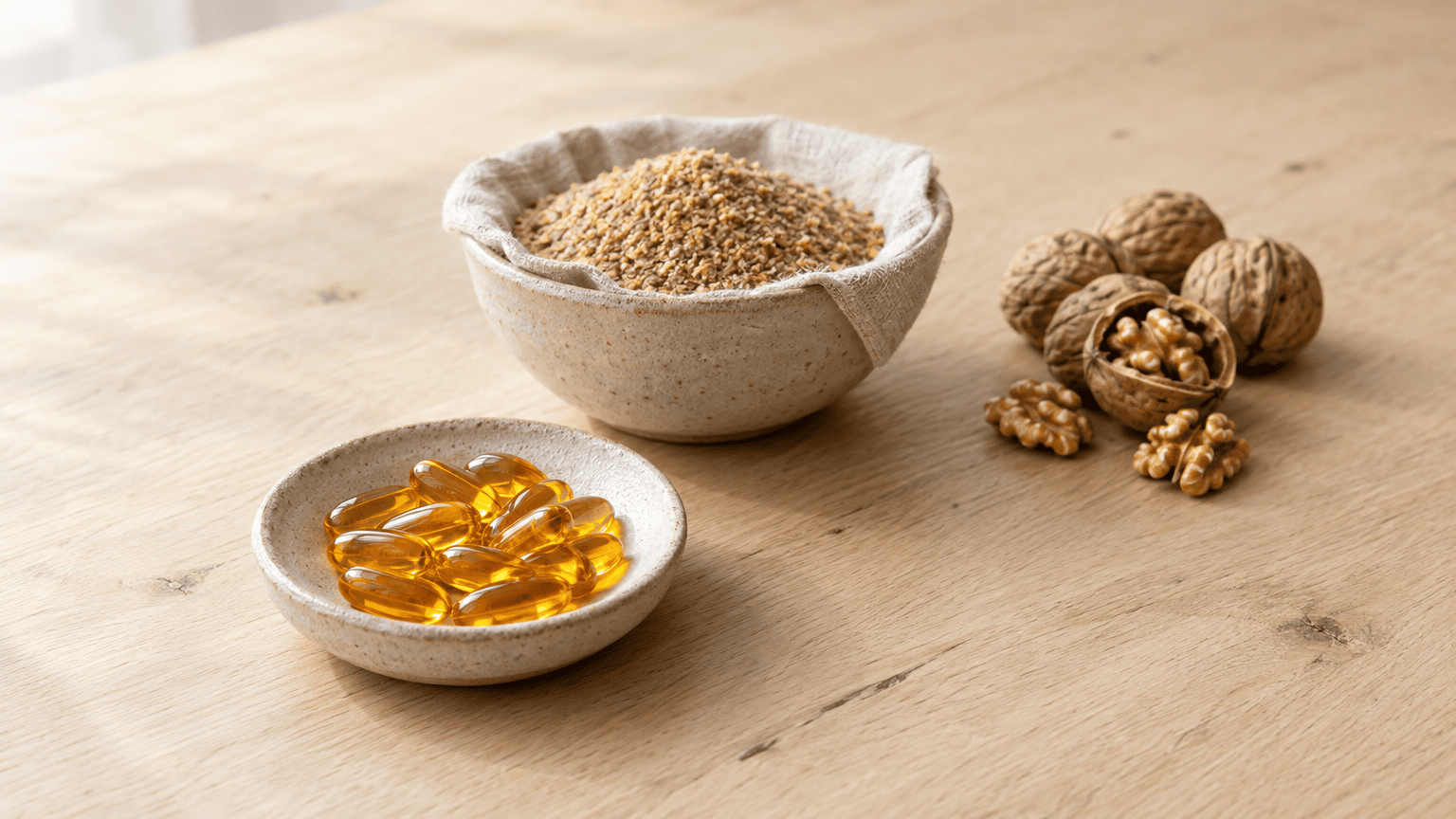
EPA and DHA are the long-chain omega-3s, and fish carry them largely because of the algae in their food chain. An algae oil goes straight to the source the fish were relying on, which is why this piece talks about algae oil at all.
Flax, chia, hemp seeds and walnuts carry ALA, the shorter-chain omega-3, and the whole argument about supplementing turns on whether a body makes enough of the longer fats from that ALA.
Here our sources stop. None of the passages behind this article measures conversion, compares vegan and non-vegan blood levels, or says what happens to a vegan who never takes algae oil. That means we cannot tell you that a daily spoon of ground flax covers you, and we cannot tell you it doesn’t. Anyone who states either with confidence should be able to show you the study they are leaning on.
The strongest case for skipping it
Vegans who leave algae oil off their shopping list have an argument that deserves better than a sneer, and it goes roughly like this.
The EFSA figure is a reference value the panel set for healthy adults and children as a group. Reading it as a personal floor, below which something goes wrong, is a step the EFSA passage does not take, and a supplement pitched as a fix for a shortfall you have never measured is selling a certainty the evidence never offered.
The second plank is ALA. People who make this argument eat flax, chia and walnuts daily and count on that ALA being turned into enough EPA and DHA, and on their view a capsule duplicates work the diet is already doing.
The third is plain cost and habit. A daily capsule is one more thing to buy and remember, and for a healthy adult with no reason to suspect a problem, adding a product on the strength of a population figure can look a lot like letting the supplement aisle set the agenda.
We think that case is stronger than the shelf suggests. It runs out at the same place our sources do. Unless you have had a blood test, you have no number for your own status, and nothing we read tells you what a vegan’s result should look like. Skipping the supplement is a bet on a figure you cannot see.
What to do with this, and the site’s line
This is the site’s line, a judgement we have made from the two EFSA numbers. Aim for the 250 mg a day EFSA treats as adequate for healthy adults and children. Our call, if you want a number you can check instead of hoping, is an algae oil whose label you can read against that figure. Treat the gram-level range as belonging to a conversation with a doctor about specific conditions, and leave it out of the everyday decision.
The label does the rest of the work. Use the EPA and DHA lines on the supplement facts panel and ignore any headline omega-3 total, since EPA and DHA are the two fats the EFSA figure names. Then check how many capsules make one serving, because the per-serving number is only yours if you take the whole serving. If the panel lists DHA with no EPA line, add up what is there and compare that. If you already eat a fortified food or drink that lists EPA and DHA on its panel, count it before buying a second product.
If you are pregnant or breastfeeding, choosing for a child, or managing a heart condition, set the product and the dose with a doctor or a registered dietitian. The EFSA figures above were written for healthy adults and children and are no substitute for that conversation.
The part of this we are least sure about is the flax question, because it is where our sources go quiet and where the skipping argument lives. If you are a long-term vegan who has had an omega-3 blood test both with and without algae oil, you hold the comparison this piece could not make, and we would rather publish that than another guess. What did your result say?
Also on this site: Cyanocobalamin or methylcobalamin? Settle the B12 dose first